Automotive relay coil specifications play a critical role in ensuring the reliable operation of vehicle electrical systems. A relay is essentially an electrically operated switch, and its coil serves as the driving force that creates a magnetic field to actuate the relay’s contacts. Understanding the specifications of an automotive relay coil is essential for engineers who design circuits that must withstand the demanding environment of modern vehicles.
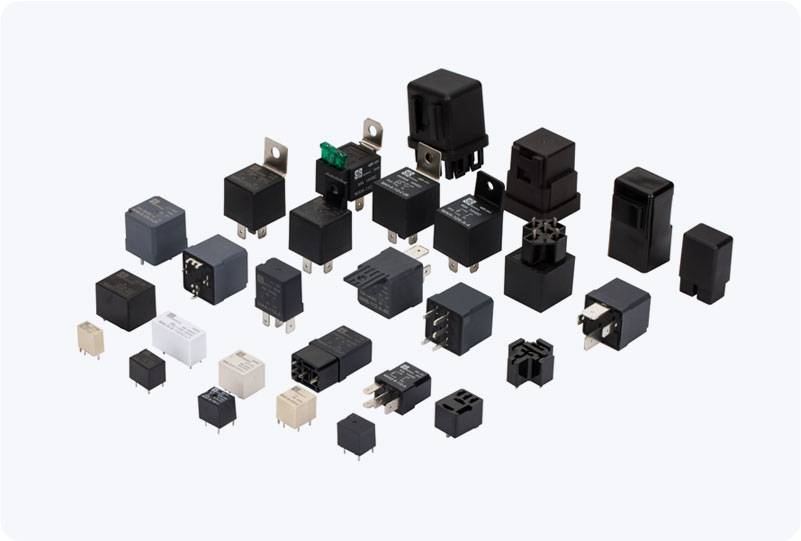
The most fundamental specification of a relay coil is its rated voltage. For most passenger vehicles, this is typically 12 volts DC, while commercial trucks and heavy machinery often use 24 volts DC systems. However, it is important to note that the rated voltage is not the same as the actual operating voltage. Automotive electrical systems frequently experience voltage fluctuations due to engine start-up, battery condition, and alternator output, which means that the relay coil must be capable of operating reliably within a voltage range rather than a fixed value. Closely related to rated voltage are the operate (pick-up) and release (drop-out) voltages. The pick-up voltage is the minimum voltage at which the relay reliably closes its contacts, while the drop-out voltage is the maximum voltage at which the relay reliably opens its contacts. For a 12V relay, the pick-up voltage typically ranges from 6 to 9 volts, and the drop-out voltage is often between 1 and 4 volts. These ranges ensure that the relay will operate correctly even under cold start conditions or when the battery is partially discharged.