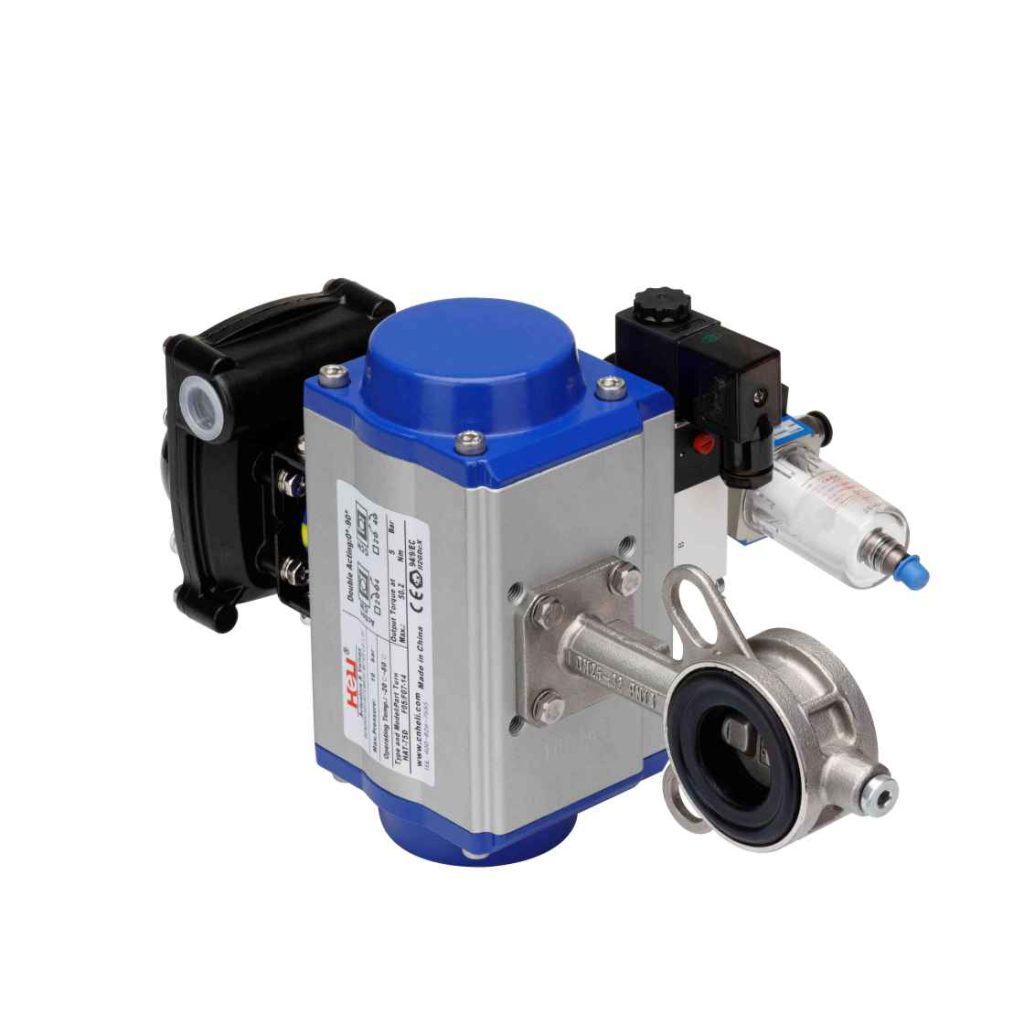
A pneumatic butterfly valve is a widely used flow control device in various industrial applications. This valve is known for its simplicity, efficiency, and cost-effectiveness, making it a preferred choice in many fluid control systems. It uses a pneumatic actuator to control the rotation of a disc-shaped valve plate, which regulates the flow of fluids through pipelines. In this article, we will explore the working principle, features, benefits, and applications of the pneumatic butterfly valve.
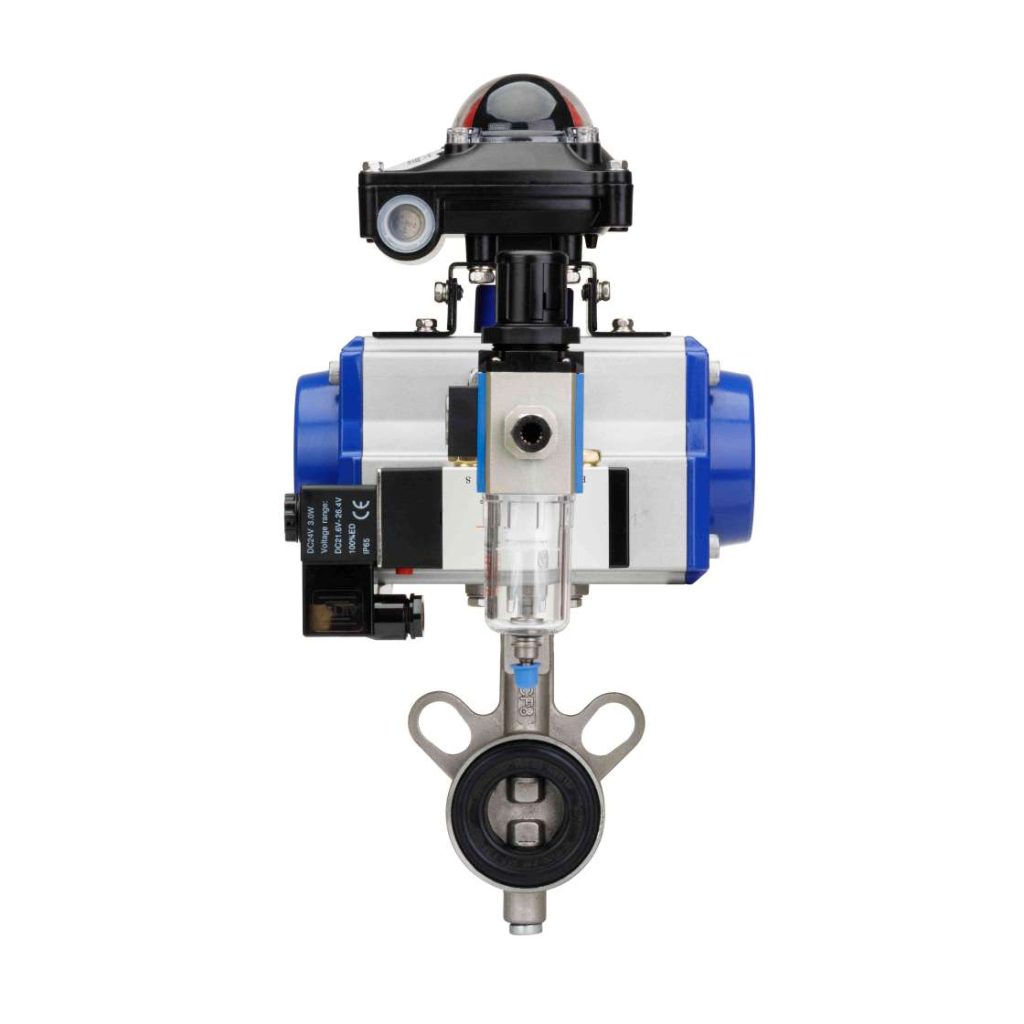
Working Principle of Pneumatic Butterfly Valve
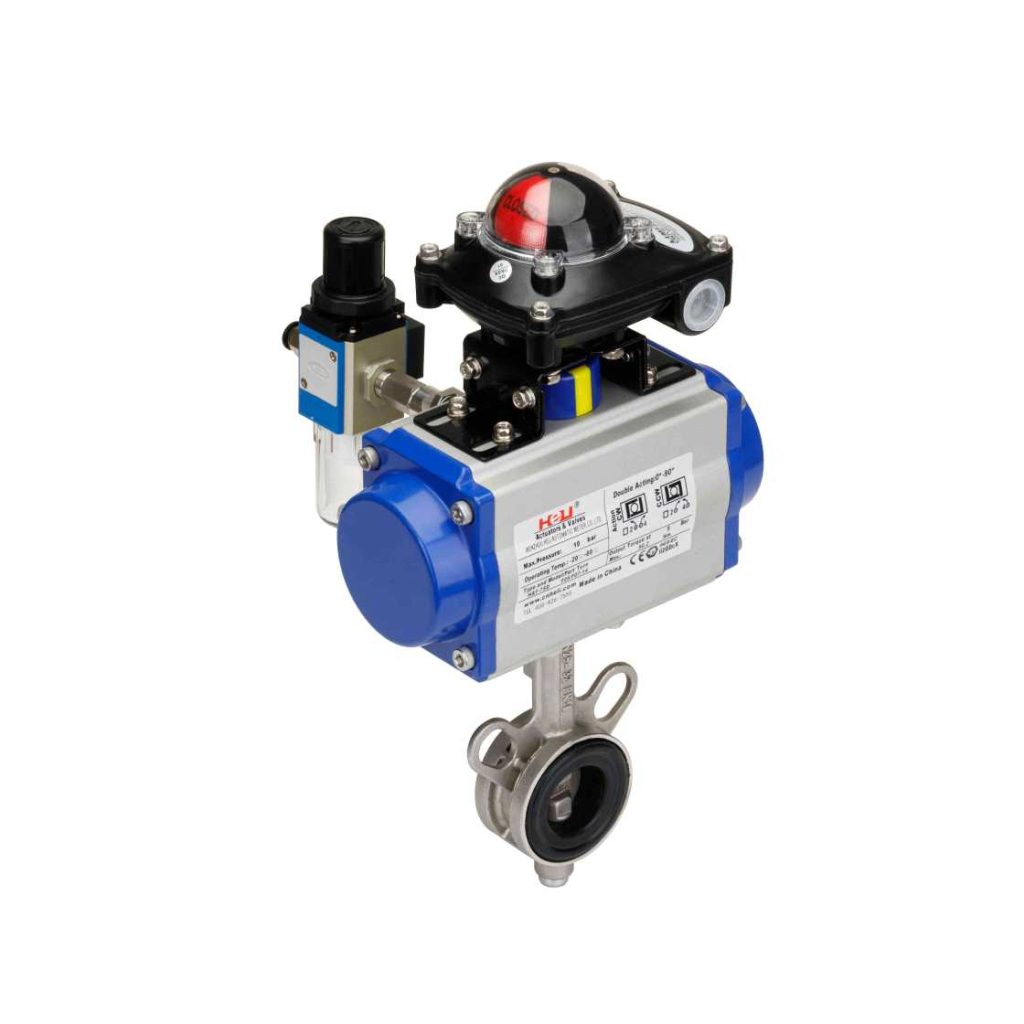
The core component of a pneumatic butterfly valve is its valve disc, which is mounted in the center of a pipe. When the valve is in the closed position, the disc is perpendicular to the flow direction, blocking the fluid from passing through. When the valve is open, the disc rotates to allow the fluid to flow through the pipeline. The pneumatic actuator is responsible for rotating the valve disc, typically using compressed air as the driving force. Pneumatic actuators are commonly categorized into two types: Double-acting actuators: These require air pressure in both directions (open and close) to move the valve disc.