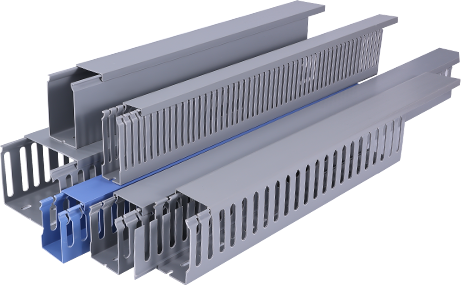
In the complex world of electrical and electronic installations, cable management is often an afterthought that can make or break the functionality, safety, and maintainability of an entire system. Among the various cable management solutions available today, Open-slot Wiring Duct stands out as a versatile, cost-effective option that has transformed how professionals organize wiring in everything from industrial control panels to commercial data centers. Unlike closed or solid-sided wiring ducts, open-slot designs feature evenly spaced openings along their side walls, allowing wires and cables to exit or enter at any point along the duct’s length rather than being limited to pre-punched fixed positions. This fundamental design difference creates a range of advantages that have made open-slot wiring duct a go-to choice for electrical engineers, installers, and maintenance teams across industries.
First, the core design advantage of Open-slot Wiring Duct lies in its unmatched flexibility for customization. In any electrical installation, the number, size, and routing path of cables can vary dramatically based on project requirements, equipment layouts, and last-minute design changes. Traditional fixed-exit ducts force installers to work around pre-determined exit points, often leading to forced bending of wires, overcrowding, or the need to cut additional openings on site, which wastes time and can create sharp edges that damage cable insulation. With open-slot designs, any slot can be used as an exit point, allowing installers to adapt to on-site changes in real time without modifying the duct itself. For example, when adding a new circuit or component to an existing control panel, technicians can simply pull the required cable out through the nearest open slot instead of removing the entire duct and cutting new openings, reducing downtime and labor costs significantly.
Secondly, Open-slot Wiring Duct improves ventilation and heat dissipation, which is critical for maintaining the longevity and safety of electrical systems. When multiple power cables or high-voltage wires are packed tightly into a closed duct, heat generated by current flow can become trapped, increasing the operating temperature of the wires and accelerating insulation degradation. Over time, this trapped heat can raise the risk of short circuits, electrical fires, or premature component failure. The open slot design allows air to circulate freely around the cables, carrying away excess heat and keeping operating temperatures within safe limits. This benefit is especially valuable in industrial settings where control panels often house dozens of high-power components, or in data centers where heat management is a constant priority. Studies have shown that open-slot wiring ducts can reduce internal cable temperatures by up to 15 degrees Celsius compared to closed designs, extending the service life of cables and connected equipment by as much as 30%.
Another key benefit of Open-slot Wiring Duct is its ability to simplify maintenance and troubleshooting. In large electrical systems, identifying a specific faulty cable among dozens of bundled wires can be a time-consuming and frustrating process. The open slot design makes it easy to trace individual cables, as each wire can be visibly accessed along its entire run without removing the entire duct cover or unpacking a bundle of wires. When a component needs to be replaced or a circuit needs to be re-routed, technicians can quickly disconnect the relevant cable, pull it out through the appropriate slot, and feed a new cable into place without disrupting adjacent wiring. This accessibility not only reduces the time required for repairs and upgrades but also minimizes the risk of accidental damage to nearby working circuits, which is a critical concern in facilities that cannot afford extended downtime.
Additionally, modern Open-slot Wiring Duct is manufactured to meet strict industry safety standards, making it suitable for a wide range of application environments. Most open-slot ducts are produced from flame-retardant PVC or non-conductive polypropylene, which provides excellent electrical insulation and resistance to chemicals, moisture, and UV damage. This makes them usable in everything from indoor control panels to outdoor industrial installations, and even in harsh environments such as manufacturing plants with high levels of dust or chemical exposure. For applications with specific requirements, such as high-temperature industrial settings or corrosive environments, specialty variants made from materials like ABS or fiberglass-reinforced plastic are also available, ensuring that there is an open-slot solution for nearly any project.
Finally, despite its advanced design and multiple advantages, Open-slot Wiring Duct remains one of the most cost-effective cable management solutions on the market. The simple manufacturing process for open-slot ducts keeps production costs low, and the time savings during installation and maintenance further reduce overall project costs. When compared to custom-cut cable trays or rigid closed conduit systems, open-slot wiring duct offers a better balance of flexibility, performance, and affordability for most small to medium-scale electrical installations.
In conclusion, Open-slot Wiring Duct may not be the most glamorous component of an electrical system, but its impact on system performance, safety, and maintainability is impossible to overstate. Its flexible design, improved heat dissipation, accessible maintenance features, and cost-effectiveness make it an ideal choice for a wide range of applications across industries. As electrical systems continue to grow more complex with increasing numbers of components and cables, the demand for flexible, reliable cable management solutions like open-slot wiring duct will only continue to rise in the coming years. For any professional working in electrical installation or maintenance, understanding the benefits of this unassuming component can lead to safer, more efficient, and more sustainable electrical systems.