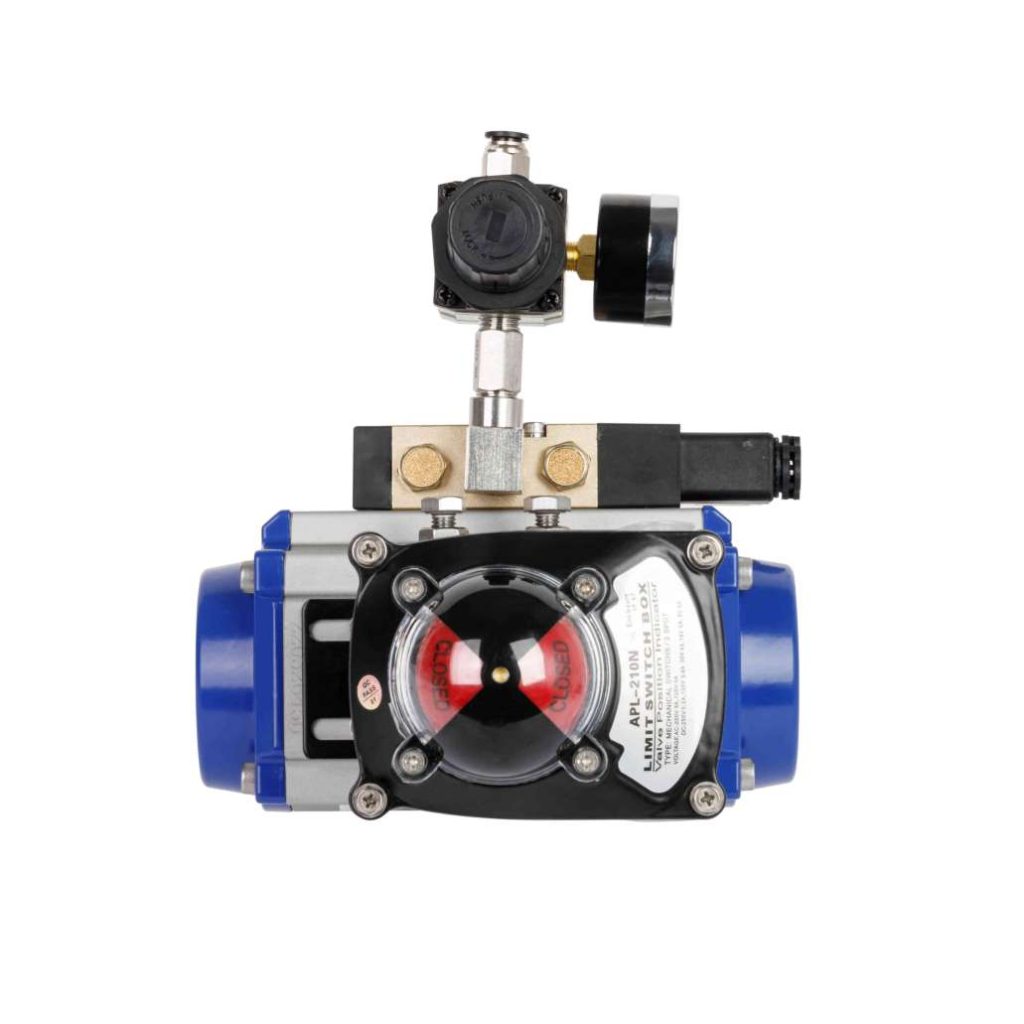
Pneumatic actuators are essential components in modern automation systems, widely used in industries ranging from manufacturing to robotics. These actuators, which convert compressed air into mechanical motion, offer various advantages such as simplicity, speed, and reliability. In this article, we will explore the working principles of pneumatic actuators, their different types, advantages, disadvantages, and common applications.
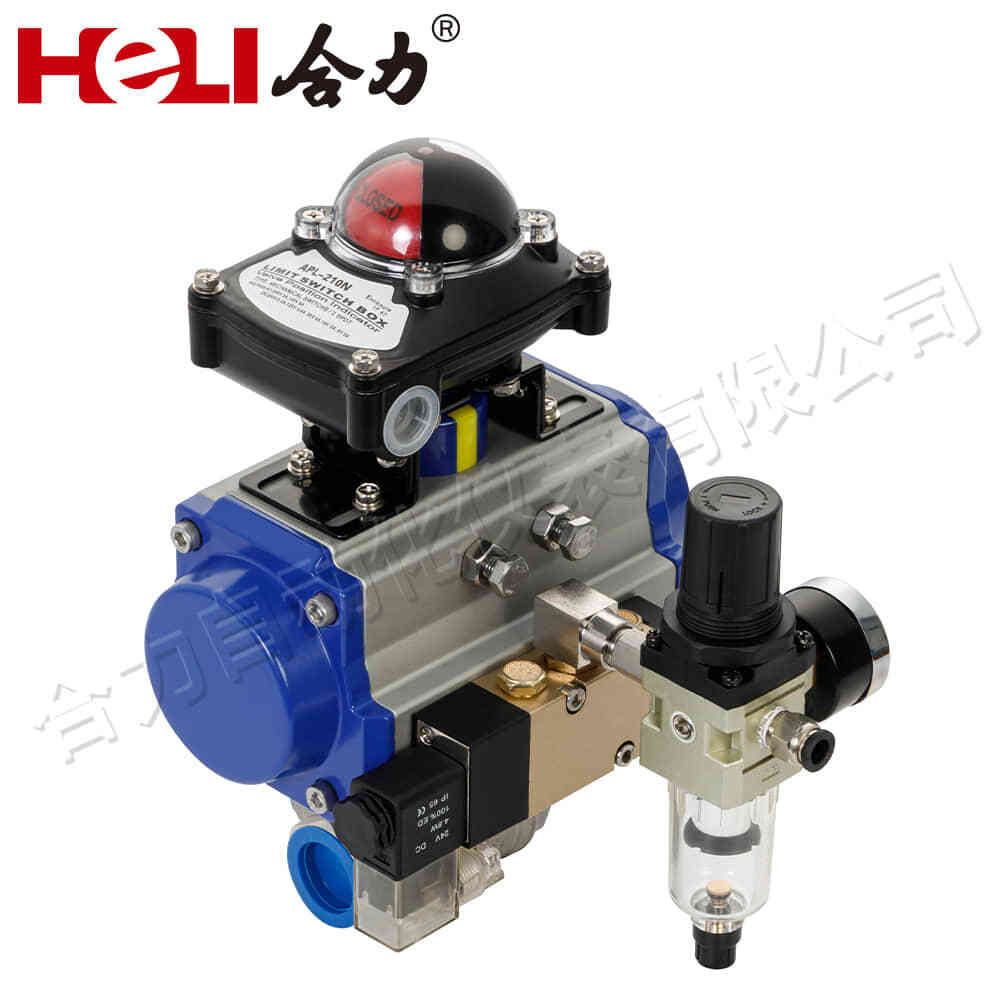
Working Principle of Pneumatic Actuators
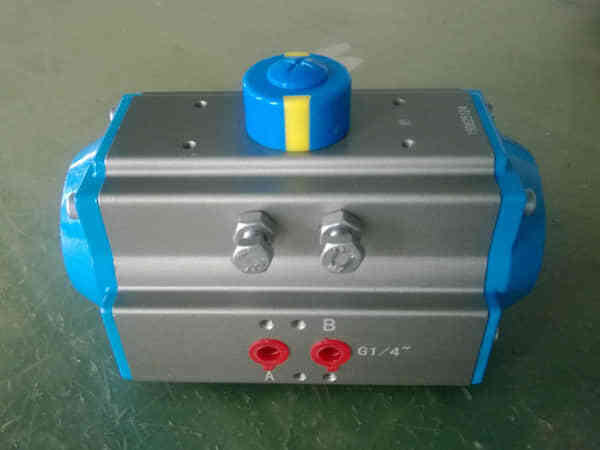
At the core of any pneumatic actuator is the concept of using compressed air to create motion. The actuator consists of a cylinder, a piston, and a source of compressed air. When compressed air is introduced into the cylinder, it exerts pressure on the piston, causing it to move. This motion can be either linear or rotary, depending on the design of the actuator. In a linear actuator, the piston moves in a straight line, and the actuator is typically used for tasks requiring push or pull movements, such as opening and closing valves or moving a robotic arm. In a rotary actuator, the compressed air is used to create a rotational force, turning a shaft to drive machinery or equipment. The movement generated by the piston is further controlled by valves, which regulate the flow and pressure of the compressed air, enabling precise and controlled motion.