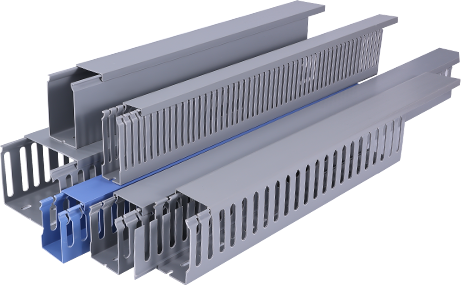
In today’s increasingly complex industrial automation and electrical control systems, organized cable management has become a critical factor that directly impacts system reliability, maintenance efficiency, and long-term operational safety. Among the various cable management solutions available on the market, DIN rail compatible wiring duct stands out as a versatile, space-saving option designed to meet the standardized requirements of industrial control panels. Unlike traditional wiring ducts that require separate mounting hardware and custom hole drilling, this specialized wiring duct is engineered to directly snap onto standard 35mm DIN rails, which are the universal mounting standard for most electrical components like circuit breakers, contactors, and terminal blocks in modern control cabinets. This inherent compatibility eliminates the need for additional mounting accessories, simplifies installation processes, and helps system integrators and electricians create neat, well-organized wiring layouts that align with global industrial design standards.
First, the core advantage of DIN rail compatible wiring duct lies in its simplified and flexible installation process. Traditional wiring ducts often require technicians to measure mounting positions, drill holes in the control panel backplate, and secure the duct with screws, a process that can take hours for a large cabinet with dozens of cable runs. In contrast, DIN rail compatible wiring duct features a pre-molded snap-fit base that locks onto standard DIN rails in seconds, with no drilling or additional fasteners required. This not only cuts down installation time by up to 50% according to industry field tests, but also makes it much easier to adjust or reconfigure the duct layout during system upgrades or component replacements. If a control system needs to add new sensors or control modules later, technicians can simply unclip the existing duct, reposition it, or add new sections without damaging the panel backplate or disrupting existing wiring, which greatly reduces downtime during system modifications.
Secondly, DIN rail compatible wiring duct delivers significant space optimization benefits that are especially valuable in compact control cabinets. As industrial automation systems continue to shrink in physical size while adding more functional components, maximizing available cabinet space has become a top priority for design engineers. DIN rail compatible wiring duct mounts directly to the same DIN rails that hold other electrical components, rather than occupying separate backplate space. This integrated mounting approach frees up valuable extra space for additional power or control components, allowing designers to pack more functionality into the same cabinet footprint. For example, in small decentralized control panels used in packaging machinery or robotic workcells, every square centimeter of space matters, and using DIN rail compatible wiring duct can reduce the overall required cabinet size by up to 15%, cutting down material costs and making it easier to fit the cabinet into tight machine enclosures.
Additionally, this type of wiring duct improves overall electrical safety and long-term system reliability. Proper cable separation and organization are essential for preventing accidental short circuits, reducing electromagnetic interference (EMI) between power and signal cables, and making it easier for maintenance technicians to trace and troubleshoot wiring issues. DIN rail compatible wiring duct is typically manufactured from flame-retardant, self-extinguishing engineering plastics like PVC or ABS, which meet strict international safety standards such as UL 94 V-0 for fire resistance. The open-slotted design of most DIN rail compatible ducts also allows for proper air circulation around cables, preventing heat buildup that can degrade cable insulation over time and extend the overall service life of the entire electrical system. Moreover, the neat organized layout created by this wiring duct reduces the risk of accidental cable damage during maintenance work, as technicians can easily access specific components without disturbing adjacent cables.
Furthermore, DIN rail compatible wiring duct is highly adaptable to a wide range of industrial and commercial applications beyond traditional control panels. Beyond automation control cabinets, it is widely used in renewable energy inverter systems, building automation distribution boxes, railway signal control units, and even data center rack power distribution units. Manufacturers offer a variety of sizes, slot widths, and color options to meet different application requirements: wider slots are available for large power cables, while narrower slots work well for small signal cables, and different colors can be used to code different circuit types for easier identification. This versatility makes it a go-to solution for electrical designers and contractors working across multiple industries, as it eliminates the need to source different cable management products for different projects.
In conclusion, DIN rail compatible wiring duct is a simple but highly effective innovation that addresses key pain points in modern electrical system design and maintenance. Its combination of easy installation, space efficiency, safety compliance, and versatility makes it an ideal choice for any project that uses standard DIN rail mounting systems. As industrial systems continue to become more compact and complex, the demand for organized, adaptable cable management solutions like DIN rail compatible wiring duct is expected to grow steadily. For system designers, electricians, and facility managers, choosing this standardized wiring duct solution not only reduces installation and maintenance costs but also improves the long-term reliability and safety of electrical systems, making it a smart investment for any modern electrical infrastructure.