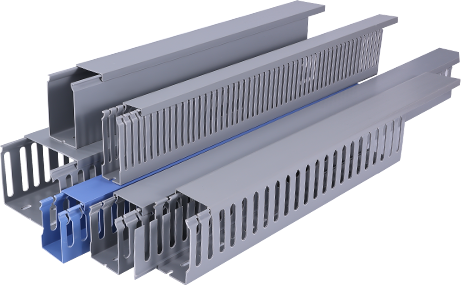
In modern industrial and commercial electrical systems, managing and protecting cables in harsh environments has become a critical challenge for engineers and facility managers. Among various cable management solutions, high temperature resistant wiring duct stands out as a specialized product designed to address the unique demands of high-heat settings. Unlike standard wiring ducts that degrade or lose structural integrity when exposed to elevated temperatures, this specialized product maintains its performance and protective properties even in consistently hot operating conditions, making it indispensable for a wide range of industrial applications from manufacturing lines to automotive manufacturing and power generation facilities.
First, it is necessary to understand the core material technologies that enable high temperature resistant wiring duct to perform in extreme heat. Most standard wiring ducts are made from general-purpose polyvinyl chloride (PVC) or low-cost thermoplastics, which typically begin to soften, warp, or crack at temperatures above 60°C. In contrast, high temperature resistant wiring duct is manufactured from advanced thermoset plastics such as fiberglass-reinforced polyester, engineered thermoplastics like PEEK or polyimide, or rigid galvanized steel with high-temperature insulating coatings. These materials can maintain their mechanical strength, insulation properties, and chemical resistance at temperatures ranging from 150°C to over 500°C, depending on the specific product specification. This material stability not only prevents structural failure but also avoids the release of toxic fumes that can occur when standard plastics degrade at high temperatures, improving overall workplace safety.
Secondly, high temperature resistant wiring duct provides significant practical benefits that extend beyond basic heat resistance. One of the most valuable advantages is enhanced long-term reliability and reduced maintenance costs. In high-heat environments, standard cable management products need frequent replacement due to material degradation, which leads to costly downtime and ongoing maintenance expenses. High temperature resistant wiring duct, however, has a service life that can be 5 to 10 times longer than standard alternatives, even in continuous high-heat operation. It also provides superior electrical insulation stability, preventing short circuits or electrical leakage that can occur when insulation materials break down in hot conditions. Additionally, this specialized wiring duct offers the same flexibility in installation as standard products, with pre-slotted sides that allow for easy cable insertion and rearrangement, making it suitable for both new system installations and retrofitting existing high-temperature facilities.
Furthermore, the wide range of industrial applications for high temperature resistant wiring duct demonstrates its versatile value across multiple sectors. In the automotive manufacturing industry, it is widely used in paint baking shops where vehicle bodies pass through ovens operating at over 200°C to cure paint coatings, protecting the power and control cables that operate conveyor systems and spraying equipment. In power generation plants, particularly in fossil fuel and nuclear power facilities, high temperature resistant wiring duct manages cables near turbine generators and boiler systems that operate at constant high temperatures. It is also a critical component in aerospace manufacturing and testing facilities, where engine testing chambers generate extreme heat that would destroy standard cable management products. Even in commercial settings such as commercial kitchen facilities and foundries, this product provides reliable cable protection that meets safety and performance standards.
In addition, selecting the right high temperature resistant wiring duct requires careful consideration of specific application requirements to ensure optimal performance. First, facility managers and engineers must accurately measure the maximum continuous operating temperature of the environment, as different materials have different heat resistance ratings. For example, fiberglass-reinforced ducts are suitable for continuous temperatures up to 250°C, while steel-based ducts with ceramic coatings can handle temperatures over 400°C for short-term peak heat exposure. It is also important to consider other environmental factors, such as exposure to chemicals, oil, or moisture, which can interact with high temperatures to affect material performance. Many high temperature resistant wiring duct products are also designed to meet flame retardant standards, which is critical for industrial applications where fire safety is a top priority.
Overall, high temperature resistant wiring duct is a specialized but essential component of modern electrical infrastructure that operates in harsh, high-heat environments. Its advanced material technology provides reliable performance where standard cable management products fail, reducing long-term maintenance costs, improving safety, and ensuring continuous system operation. As industrial processes continue to push the boundaries of operating temperatures, and as demand for reliable, long-lasting electrical infrastructure grows, the importance of high temperature resistant wiring duct will only continue to increase. By understanding its core properties, benefits, and application requirements, industry professionals can select the right product for their specific needs, ensuring safe, efficient, and reliable cable management for years to come.