A relay circuit is an essential component in the world of electronics and automation. It serves as an electrical switch that allows a low-power signal to control the switching of a much higher-power circuit. Widely used in various industries and systems, relays play a significant role in enhancing control mechanisms, providing safety measures, and managing complex systems efficiently. This article will explore the fundamental principles, applications, and benefits of relay circuits in electrical systems.
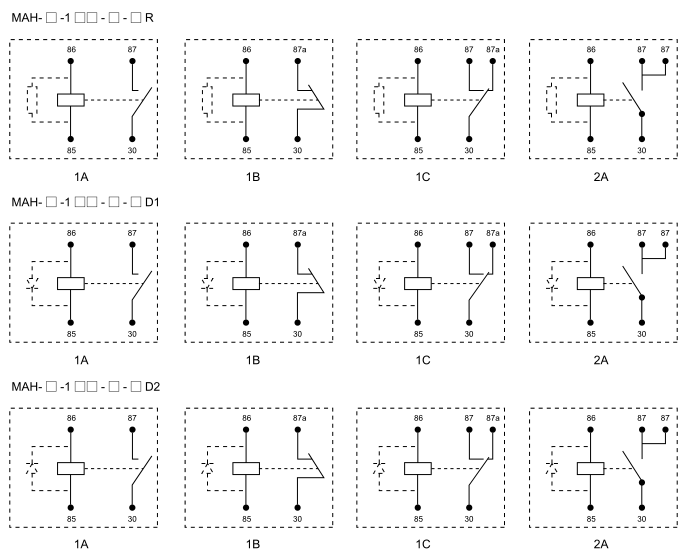
What is a Relay Circuit? At its core, a relay circuit consists of a relay, which is an electromechanical switch. The relay uses an electromagnetic coil to control the opening and closing of a set of contacts, which are connected to an external circuit. When an electric current flows through the coil, it generates a magnetic field that pulls or releases a metal armature, causing the contacts to either open or close. This simple mechanism allows a small current or voltage to control the flow of a larger current. Relays can have different configurations, including Single-Pole Single-Throw (SPST), Single-Pole Double-Throw (SPDT), and Double-Pole Double-Throw (DPDT). These configurations refer to the number of contacts in the relay and how they are controlled, which in turn determines the complexity of the relay’s application.