A 24VDC relay is an electromechanical switch commonly used in various industrial, automation, and control applications. Relays are devices that allow one circuit to control the operation of another circuit by opening and closing contacts in response to a control signal. The 24VDC relay operates on a 24-volt direct current (DC) power supply to activate its internal mechanisms. This article explores the working principles, applications, features, and advantages of 24VDC relays in modern electrical systems.
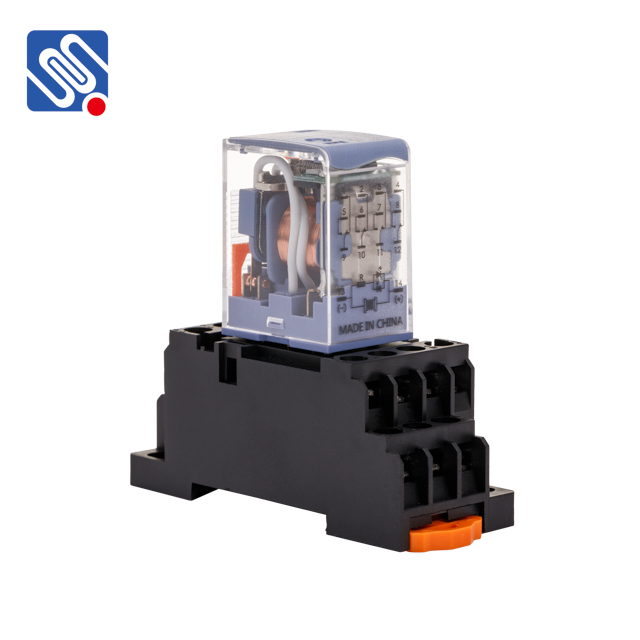
What is a 24VDC Relay? A 24VDC relay is a specific type of relay designed to work with a 24-volt DC input voltage. It has two main components: the coil and the contacts. The coil is the component that gets energized by the 24VDC power source. When current flows through the coil, it generates a magnetic field that either opens or closes the relay’s contacts, depending on the design of the relay. These contacts can then be used to control a higher voltage or current circuit, providing a safe and efficient way to control electrical equipment. How Does a 24VDC Relay Work? The operation of a 24VDC relay is based on the principles of electromagnetism. When a voltage is applied to the relay coil, a magnetic field is generated. This magnetic field attracts or repels a movable armature or iron core within the relay. The movement of the armature causes the relay’s contacts to either open or close. When the relay is in its resting state (when no voltage is applied), the contacts are either open or closed, depending on whether the relay is a normally open (NO) or normally closed (NC) type. When the 24VDC voltage is applied to the coil, the contacts shift to the opposite state, enabling or disabling the connected circuit.