Lockout hasps are essential tools in industrial safety, designed to protect workers during equipment maintenance and repair. In any environment where machinery operates with electricity, hydraulics, pneumatics, or other energy sources, unexpected activation can lead to serious injuries or fatalities. Lockout hasps play a critical role in preventing such accidents by enabling a secure and reliable method to isolate hazardous energy.
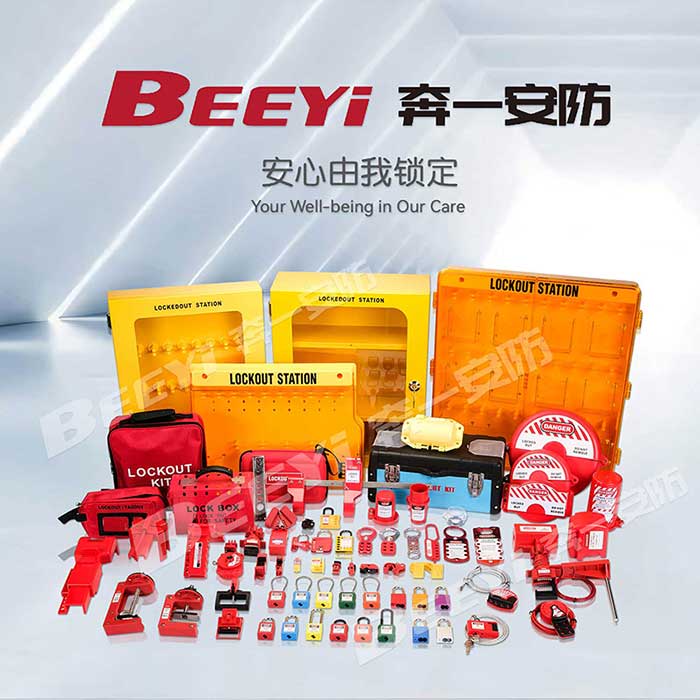
A lockout hasp is a metal device with multiple holes that allows several locks to be attached simultaneously. This design makes it possible for multiple workers to secure a single energy source independently. Each worker places their personal lock on the hasp, ensuring that the machine cannot be re-energized until every individual has removed their lock. This multi-lock feature provides a high level of safety and accountability, especially in situations where several personnel are performing maintenance tasks on the same equipment. The primary purpose of a lockout hasp is to enforce a controlled lockout/tagout (LOTO) procedure. Lockout/tagout is a recognized safety protocol in many countries, including guidelines established by OSHA in the United States. It involves isolating the energy source, locking it out, and tagging it to warn others that maintenance work is in progress. A lockout hasp simplifies this process by providing a single point of control where multiple locks can be applied, thereby preventing accidental start-ups.