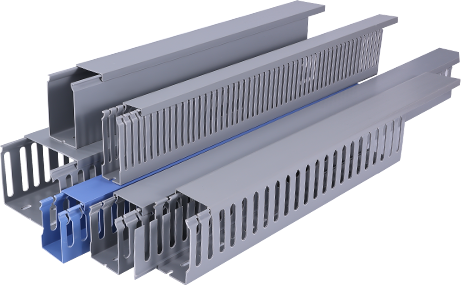
In modern industrial automation systems, industrial control cabinets serve as the central nervous system of production lines, housing hundreds of critical electrical components, circuit boards, and thousands of feet of conductive wiring. Keeping these wires organized, protected, and easily accessible is not just a matter of neatness—it directly impacts system reliability, maintenance efficiency, and workplace safety. This is where high-quality wiring duct for industrial control cabinets comes into play, a seemingly simple component that delivers outsized value to industrial operations. Wiring duct, also commonly referred to as wire raceway or cable duct, is a structured channel system designed to route, segregate, and contain electrical and control wires within control cabinets, addressing common challenges like wire tangling, accidental damage, and signal interference that plague poorly organized setups.
First, it is important to understand the core functions that proper wiring duct fulfills in industrial control cabinets, beyond basic wire organization. In industrial environments, control cabinets are often subject to fluctuating temperatures, dust, moisture, and vibration from surrounding heavy machinery. High-grade wiring duct acts as a physical barrier that protects sensitive control wiring from abrasion against sharp metal cabinet edges, prevents dust buildup that can cause short circuits, and reduces the impact of constant vibration that can loosen wire connections over time. Additionally, wiring duct enables clear segregation between different types of wiring: high-voltage power cables can be separated from low-voltage signal wires and communication cables, eliminating electromagnetic interference that can disrupt sensitive sensor signals or communication protocols like Modbus or Ethernet/IP. This segregation is not just recommended—it is often required by global electrical safety standards such as NEC and IEC to prevent cross-talk and fire hazards in industrial control systems.
Secondly, selecting the right type of wiring duct for industrial control cabinets depends on several key factors that align with specific application requirements. The most common materials used for industrial wiring duct are PVC (polyvinyl chloride) and rigid ABS plastic, with some high-temperature applications using metal or flame-retardant fiberglass options. PVC wiring duct is cost-effective, offers good insulation properties, and works well for most standard industrial applications with operating temperatures between -10°C and 60°C. For environments with higher heat exposure, such as control cabinets near industrial furnaces or welding equipment, flame-retardant ABS or fiberglass duct is a better choice, as it can withstand temperatures up to 120°C without warping or releasing toxic fumes. Another key selection factor is duct size and slot design: wiring duct comes in a range of widths and depths, and finger-slot designs allow installers to easily pull wires out at any point along the duct for connections, while solid-wall duct offers greater protection for high-voltage runs. For control cabinets with high wiring density, such as those used in robotic assembly lines, wider ducts with evenly spaced slots prevent overcrowding and allow for better airflow, which helps reduce heat buildup that can shorten the lifespan of electrical components.
Additionally, proper installation of wiring duct brings long-term benefits that improve the overall lifecycle of industrial control cabinets. Even the highest quality wiring duct will fail to deliver value if installed incorrectly, so following best practices is essential. The first rule of installation is to plan the routing layout before cutting or mounting the duct: map out where power, signal, and communication cables will run, leaving at least 20% to 30% of empty space in the duct for future expansions or modifications. This is a critical step that many installers overlook, leading to overcrowded ducts that make future upgrades time-consuming and risky. When mounting the duct to the cabinet interior, leave small gaps between the back of the duct and the cabinet wall to improve airflow and prevent moisture buildup, which can cause corrosion over time. When pulling wires through the duct, avoid over-tightening wire bundles, as this can make it difficult to replace individual wires later and restricts airflow. For added safety, install separate grounding ducts for shielded communication cables to further reduce signal interference in high-noise industrial environments.
Finally, the long-term value of investing in high-quality wiring duct for industrial control cabinets cannot be overstated. While upgrading to premium wiring duct may add a small amount of upfront cost to a control cabinet build, it reduces long-term operational costs significantly. Well-organized wiring ducts cut down maintenance time by 30% to 50% when troubleshooting electrical issues, because technicians can quickly identify and access specific wires without untangling messy bundles. They also reduce the risk of unplanned downtime caused by wire damage or short circuits, which can cost industrial facilities thousands of dollars in lost production per hour. For facilities that follow ISO 50001 energy management standards, properly installed wiring duct improves airflow within the cabinet, reducing heat buildup and lowering energy consumption required for cabinet cooling. Overall, wiring duct is a foundational component that underpins the reliability, safety, and scalability of modern industrial control systems, making it a critical investment for any industrial automation project.